

The Leader of Butterfly Valves Manufacturer In China
NSW VALVE is a leading butterfly valve manufacturer in China. You can purchase and consult the butterfly valve you are looking for here in one stop. Our centerline butterfly valve, triple eccentric butterfly valve, high performance butterfly valve, double eccentric butterfly valve will strictly control the quality of butterfly valve material, butterfly valve size and butterfly valve seal.
How To Choose a Butterfly Valve
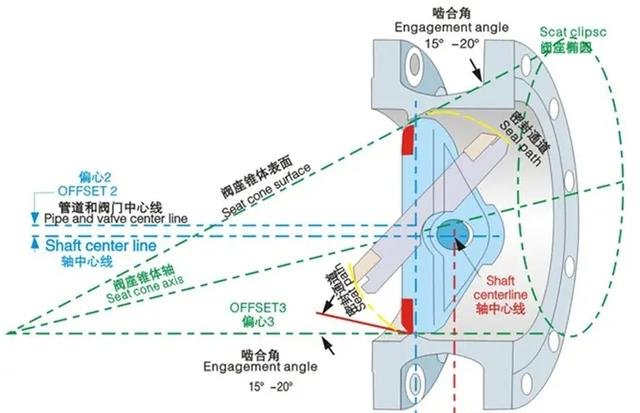
When selecting a butterfly valve, you need to consider the butterfly valve type, actuator, sealing material, end connection, butterfly valve material, size, fluid characteristics etc. NSW provides a selection guide to ensure that the butterfly valve performance matches the application requirements and improve system efficiency and reliability.

Reliable triple offset butterfly valve for severe service conditions. API 607 certified, corrosion resistant, and designed for long cycle life. Suitable for steam, cryogenic, and abrasive media. Download catalog.

Engineered for slurry, paper pulp, and abrasive fluids, this double eccentric butterfly valve features a wear‑resistant seat and offset disc design. ISO 5211 mounting available. Request a quote.
API 609 high performance butterfly valve with ISO 15848‑1 fugitive emission and API 607 fire‑safe certification. Suitable for critical refining, petrochemical, and gas pipeline applications. Download datasheet.
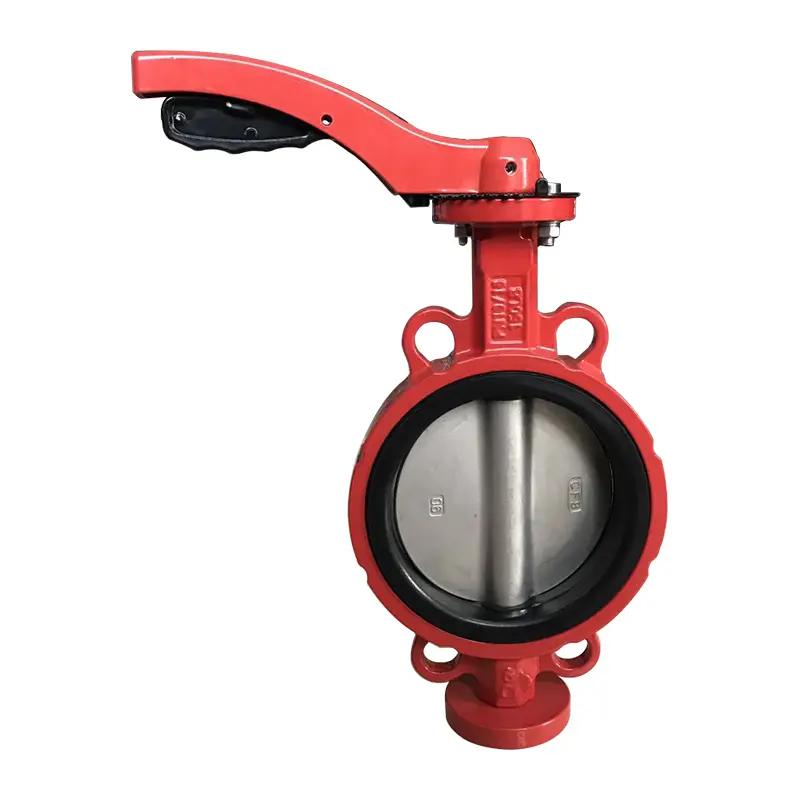
Our concentric butterfly valve with full rubber seat provides bubble‑tight shutoff in low‑pressure water, irrigation, and pool applications. EPDM/NBR options. Fast delivery. Request price.
Core Components of a Butterfly Valve
A butterfly valve consists of five essential parts that work together to achieve opening, closing, and flow regulation.
1. Valve Body
• Function: The outer shell and structural frame. It houses all internal parts and withstands pipeline pressure.
• Characteristics: Typically shaped as a circular conduit that accommodates the disc. Materials include cast iron, cast steel, stainless steel, or plastic, depending on the application.

2. Butterfly Disc
• Function: The most critical part – a round “baffle” that directly contacts the media and controls flow by rotating.
• Characteristics: Precisely machined to form a seal with the seat. When fully open, the disc is nearly parallel to the flow direction, creating very little resistance.

3. Valve Stem
• Function: Transmits torque from the actuator (handwheel, motor, etc.) to the disc, enabling rotation.
• Characteristics: A solid metal rod rigidly connected to the disc via pins, keys, or other means. Its strength and stiffness determine the valve’s operational reliability.

4. Sealing Components
This is the key to leak prevention. It usually includes:
• Seat Ring: Fixed on the inner wall of the valve body, it contacts the disc to form a seal.
Soft seal: Made of rubber or PTFE – excellent tightness but limited temperature/pressure resistance.
Hard seal: Made of metal (often with hardfacing) – withstands high pressure and temperature, though slightly less tight than soft seals.
• Disc Sealing Surface: The specific area on the disc that meets the seat ring; often hardened or coated for wear resistance.

5. Actuator
• Function: Provides the power to rotate the valve stem.
• Common types:Manual: Handwheel or lever – common for small diameters and general use.
Pneumatic: Air cylinder – for fast operation or hazardous areas.
Electric: Motor – for automation and remote control.
Hydraulic: Hydraulic unit – for very high torque requirements.
6. Additional Auxiliary Parts (not part of the core five but worth noting)
• Mounting bracket for connecting the actuator.
• Packing (seal) around the stem to prevent external leakage, plus a gland to compress the packing.
• Worm gear mechanism (often seen on larger manual butterfly valves) for fine position adjustment.
Understanding Butterfly Valve Types
High Performance Butterfly Valve
High Performance Butterfly Valve is a type butterfly valve with an eccentric structure (double or triple eccentric). it normally in a hard seal/special soft seal design. They are used in high-temperature, high-pressure, highly corrosive, particulate-containing media, or demanding regulating conditions.
Double Eccentric Butterfly Valve
suitable for medium pressure and certain applications that require a longer service life. The double eccentric design can reduce the friction between the valve seat and the butterfly plate, thereby extending the service life of the valve.
Triple Eccentric Butterfly Valve
suitable for high pressure and harsh working conditions, such as high temperature or highly corrosive environment. The triple eccentric structure not only provides a tighter sealing effect, but also reduces the operating torque,improving the efficiency and reliability of the valve.
Concentric Butterfly Valve
also known as concentric butterfly valve is suitable for low pressure and low sealing requirements, such as water and air regulation. They generally have higher sealing performance and lower cost.

Determine the operation of the butterfly valve
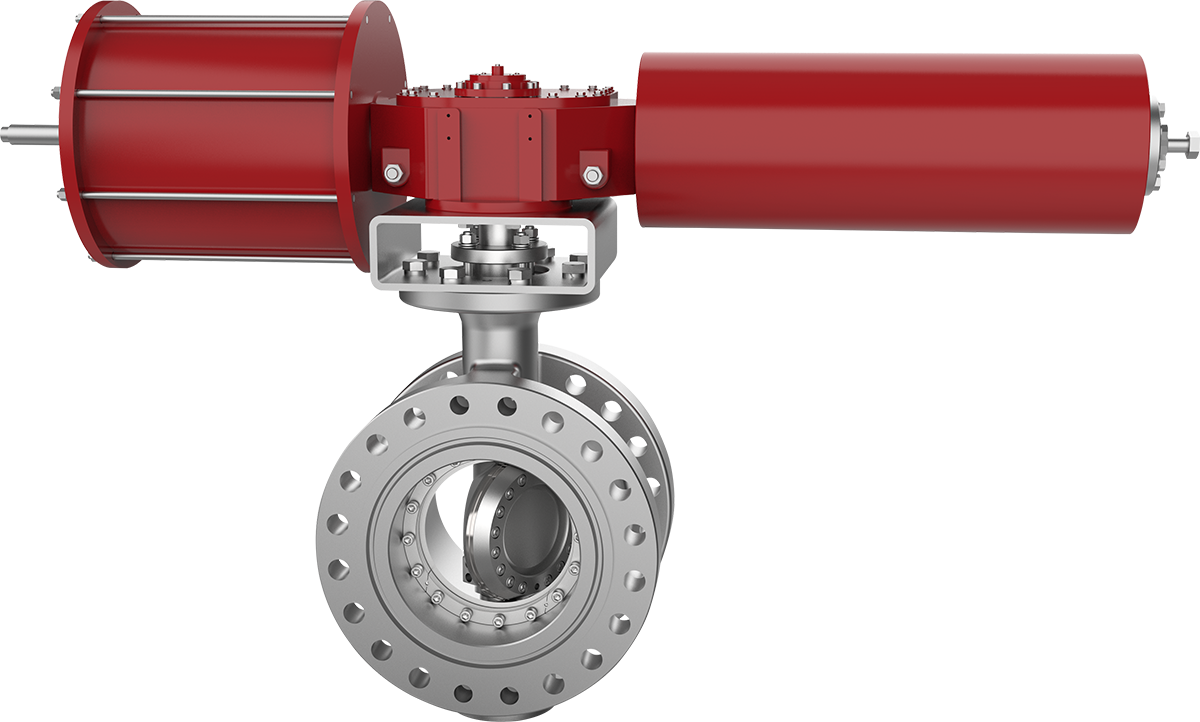
The operation of butterfly valves include manual, electric actuator, and pneumatic actuator.
Manual Butterfly Valve: Suitable for occasions where adjustments are not made frequently, and is operated directly by a handwheel or a wrench.
Therefore, it is suitable for occasions with small diameters and low operating frequency.
Electric Butterfly Valve: Suitable for applications that require remote control or automation systems. Electric butterfly valves can be easily integrated with other control devices to achieve high automation.
Pneumatic Butterfly Valve: Suitable for occasions that require fast response and/or large operating force, especially for emergency shut-off or safety-related applications.
Choose the Correct Butterfly Valve Seat Sealing Material
The sealing surface material of the butterfly valve can be divided into soft seal and metal hard seal according to the different media.
Soft Seat Butterfly Valve
Soft seal is suitable for corrosive, highly toxic and highly hazardous media, it has Rubber seat butterfly valve, PTFE seat butterfly valve etc.
Metal Seat Butterfly Valve
Metal seat seal is suitable for high temperature and high pressure working conditions. the butterfly valves seat can be F304, F316, Stellie, Monel etc.


Consider The Butterfly Valve End Connection
The main end connect of butterfly valves include wafer type, flange type and clamp type.
Wafer Butterfly Valve
The wafer type connection is often used for small-diameter butterfly valves.
It is easy to install and has low cost, so it is widely used in small-diameter
pipelines.
Flange Butterfly Valve
The flange connection is suitable for large-diameter and high-pressure pipelines.
Lug Butterfly Valve
The lug butterfly valve is a special type of butterfly valve. Its notable feature is that the valve body has lugs on both sides, which is convenient for fixing between two pipe flanges by bolts. This design makes the lug butterfly valve mainly used to cut off the medium in the pipeline.
Clamp Butterfly Valve
The clamp type connection is used for quick installation and is common in the food industry.
What Working Conditions Are Butterfly Valves Suitable For
Choosing a professional valve team to be responsible usually brings the best results. As a leader in Chinese butterfly valve manufacturers, NSW Valve has always adhered to professional technical guidance, high-end technical support, and perfect after-sales service as the standard to solve your one-stop purchasing needs.
Butterfly valves are widely used, mainly in various industrial fields, including control systems in the petroleum, chemical, metallurgical, water treatment, electric power, thermal and other industries. Butterfly valves are suitable for controlling or cutting off various fluid media, such as water, gas, oil, steam, etc., and are particularly suitable for low-pressure, large-diameter pipeline systems.
In terms of specific application occasions, butterfly valves can be used in the following situations:
Pipeline regulation or cut-off fluid:
Butterfly valves are suitable for controlling or cutting off various fluid media, such as water, gas, oil, steam, etc.
Low-pressure, large-diameter pipeline:
Butterfly valves are usually used in low-pressure, large-diameter pipelines. They have a simple structure, light weight, easy use, and little impact on the pipeline system.
Cargo storage tanks:
Butterfly valves can be used to control the flow and pressure of liquid or gas in the storage tank, and are suitable for tank control systems in the chemical, petroleum and other industries.
Clean environment:
Butterfly valves have a simple structure, good sealing, and are easy to clean. They are suitable for occasions with high requirements for clean environment, such as food, pharmaceutical and other industries.
Why Choose a Butterfly Valve Manufacturer - NSW - a China Factory
 |
|
|
|
|
Source Butterfly Valve Factory |
Perfect Butterfly Valve Quality Control System |
Professional Butterfly Valve Technical Team |
Enthusiastic Sales Team |
7*24 After-Sales Team |
| Get the Butterfly Valve Price directly from the factory, Control the gate valve quality directly from the factory. | According to the ISO 9001 quality control system, the quality of gate valves can be very well controlled in every production link in the NSW Butterfly Valve Factory. | The technicians are very familiar with the structure and performance of Butterfly Valve. Help customers choose the right butterfly valve and butterfly valve material according to the pipeline fluid medium. | The sales team is full of vitality and enthusiasm, closely assisting customers and valve technical team, telling customers valve selection and butterfly valve prices. | If customers encounter questions in the use of butterfly valves, our after-sales team will help customers solve butterfly valve problems within 30 minutes after receiving feedback. |